
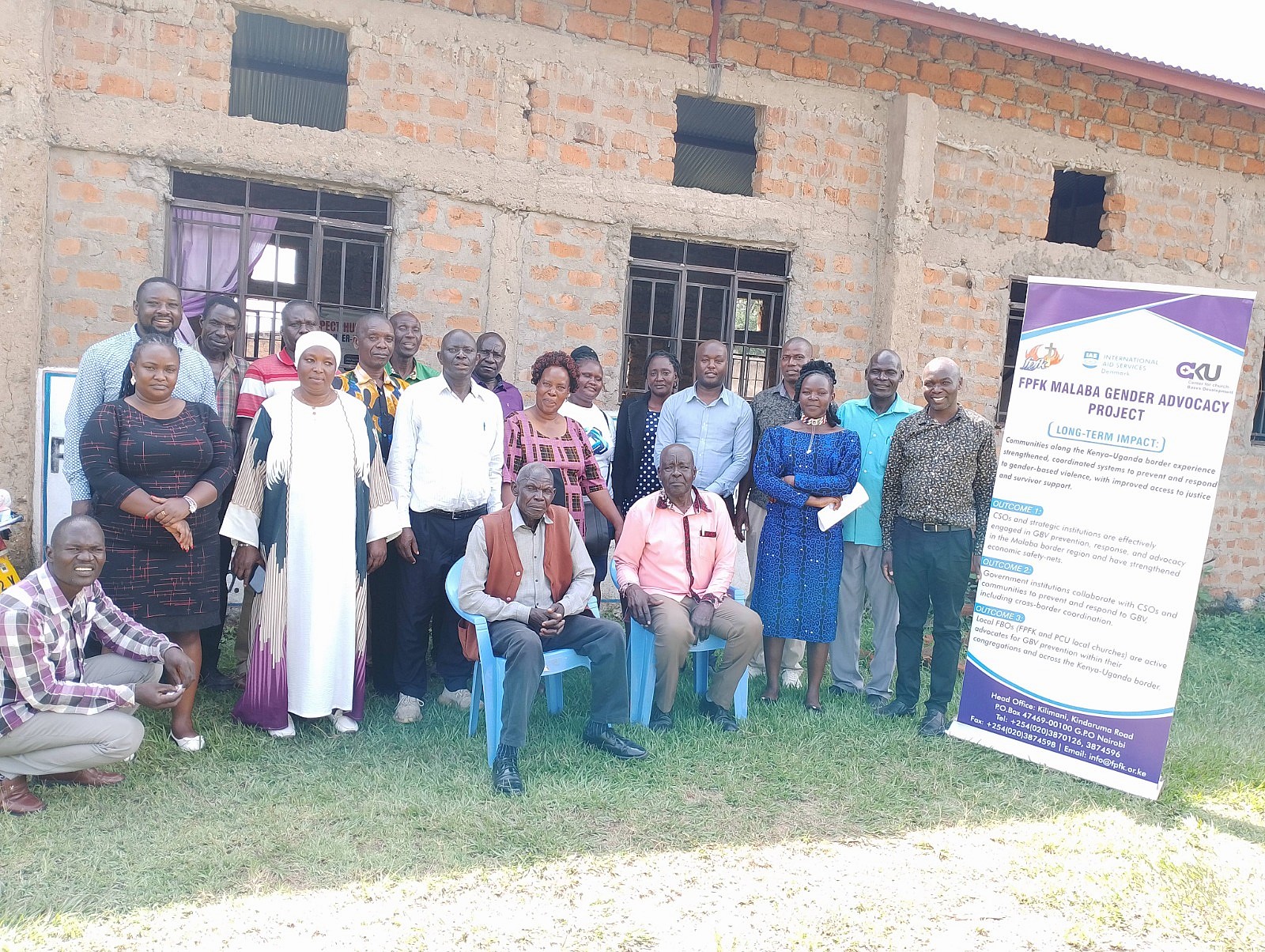
FPFK Malaba Gender Advocacy Project
FPFK
Malaba Gender Advocacy Project
Introduction
The FPFK Malaba Gender Advocacy Project is a one-year project started in January 2024 to March 2025 and funded by Center for Church-Based Develop- ment (CKU) through International Aid Services (IAS). The project is a continua- tion of a previous one-year phase (Civic space project Malaba) that came as a result of increased cases of GBV in Malaba, the border of Kenya and Uganda. The project objective was to address GBV through advocacy.
The long queues of trucks witnessed in Malaba stalling for days and weeks awaiting clearance, largely contribute to menace as women and young girls who engage in hawking along the highway are lured into transactional sex and child abuse consequently increasing domestic violence.
This intervention has strengthened the advocacy efforts of CSOs through capacity building to enable them create awareness, monitor and report GBV cases as well as holding the duty bearers accountable. The project has been able to form and strengthen coordination mecha- nisms for the grassroot CSO groups to promote networking and resource mobilization for their economic empowerment. The radio talk shows have been remarkable in creation of awareness and promoting GBV conversations in the target communities aimed at prevention. This has resulted to men coming out to also speak about how they have been contributing to GBV and how they are also affected by it. The intervention also fostered closer collaboration between CSOs and other non-state actors such as GESAO and Grassroot Kenya, who also have similar goal of addressing GBV.
Achievements
- The project trained 20 community-based organizations to address GBV within communities as a result, Collaboration between these groups and the state actors has greatly improved.
- The installation and upgrade of the Early Warning Early Response System enhanced reporting of GBV cases and promoted credibility by the duty bearers.
- Having trained and sensitized religious leaders on the role of religious institutions in addressing GBV, most of the religious leaders have established gender desk in churches to create awareness and respond to GBV cases.
- The project successfully utilized the media platforms to create more awareness and this has promoted the visibility of FPFK and its contri- bution to the developmental work